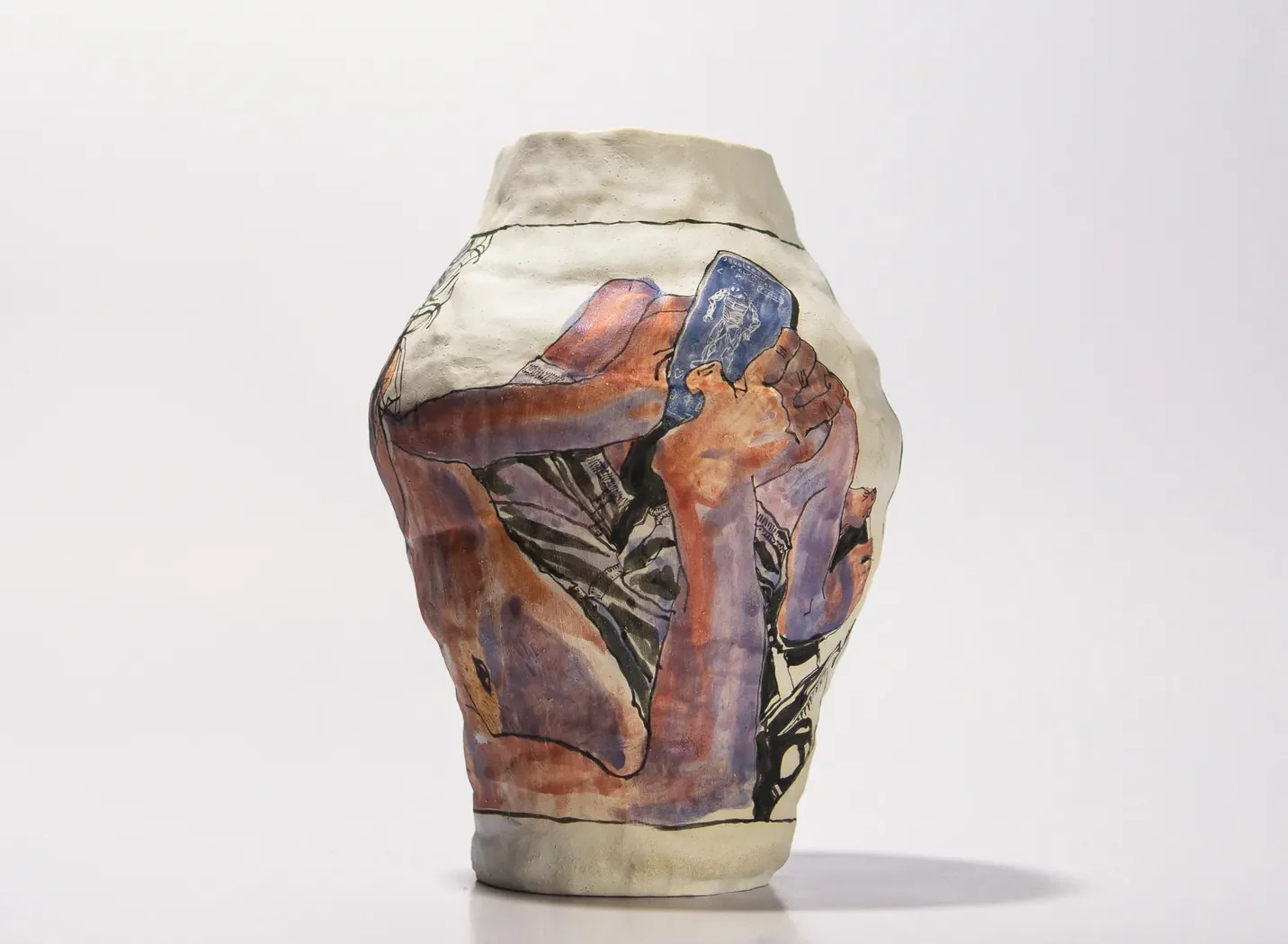
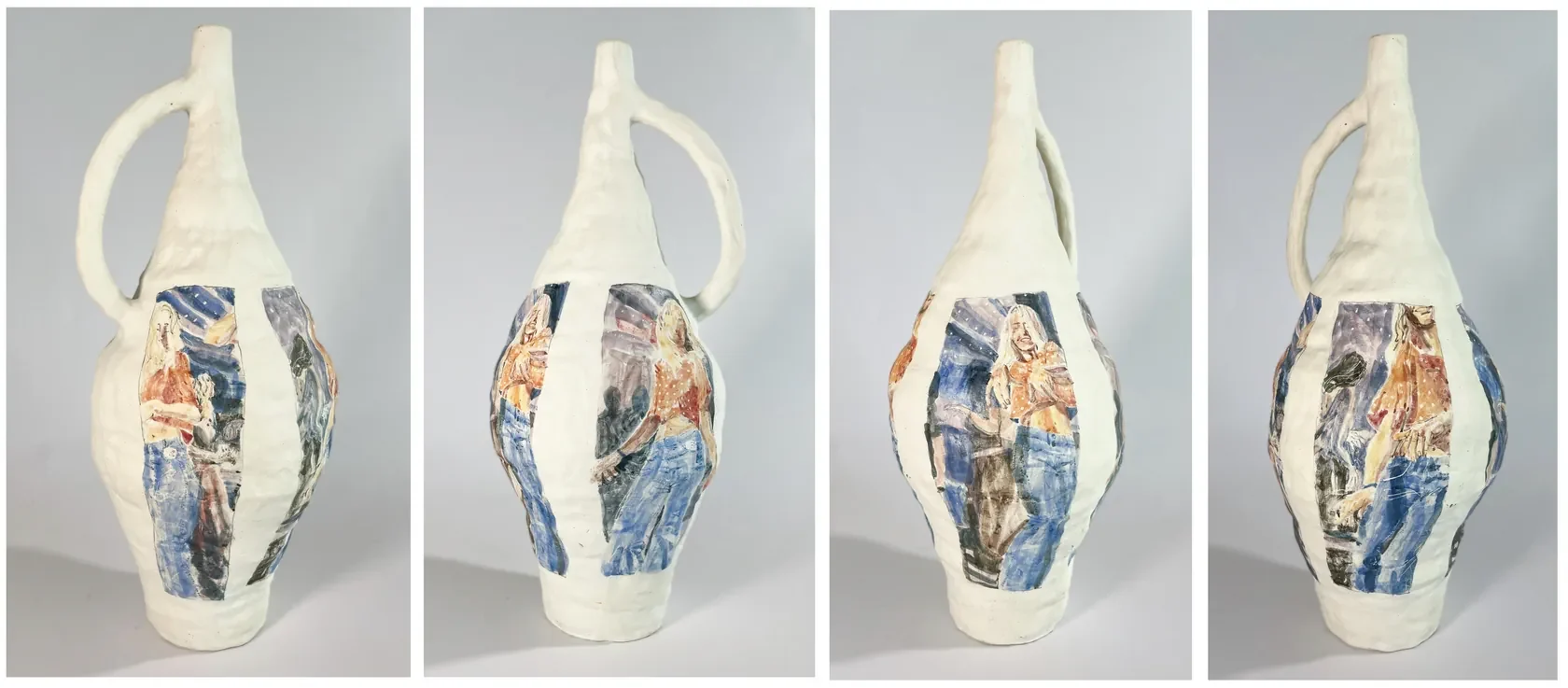
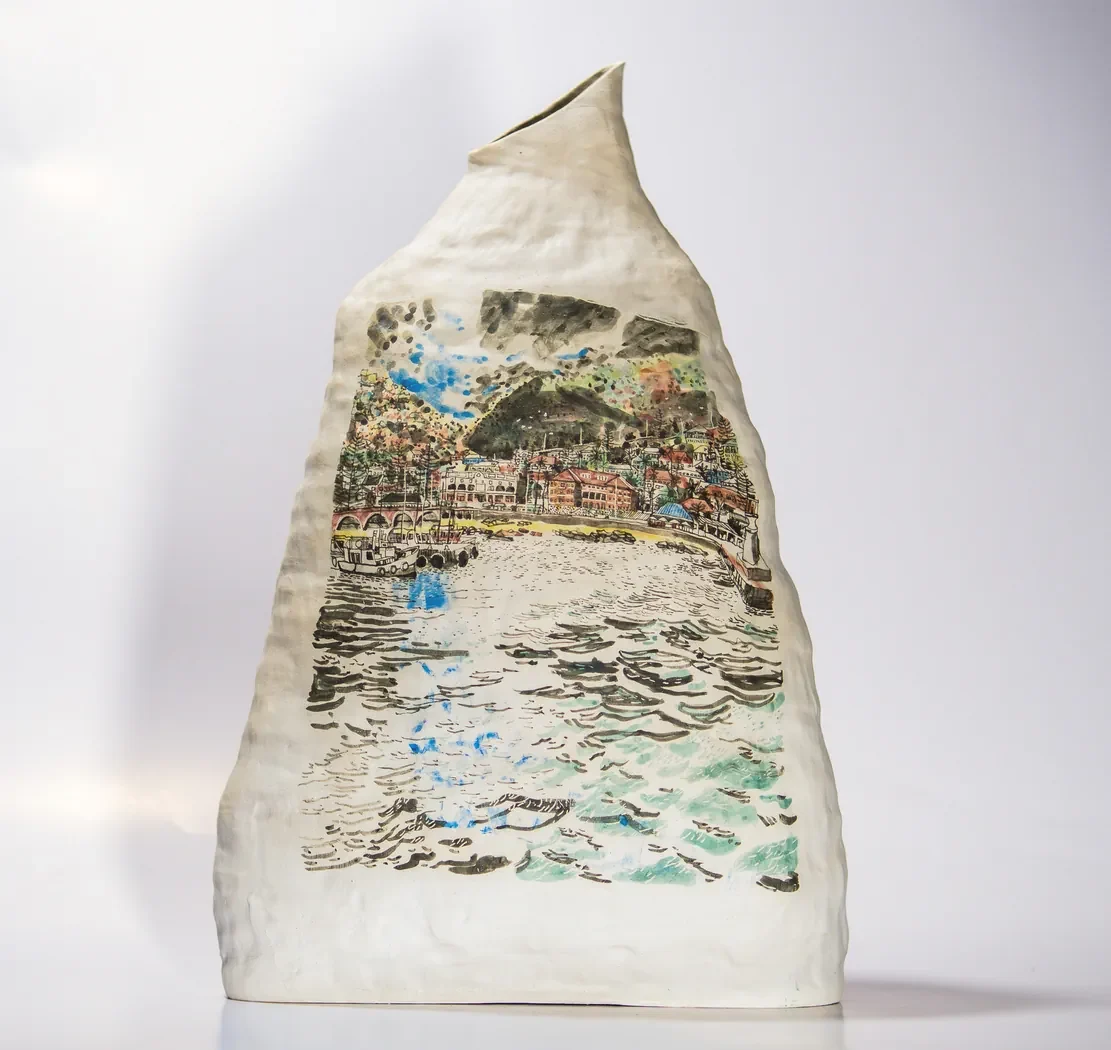
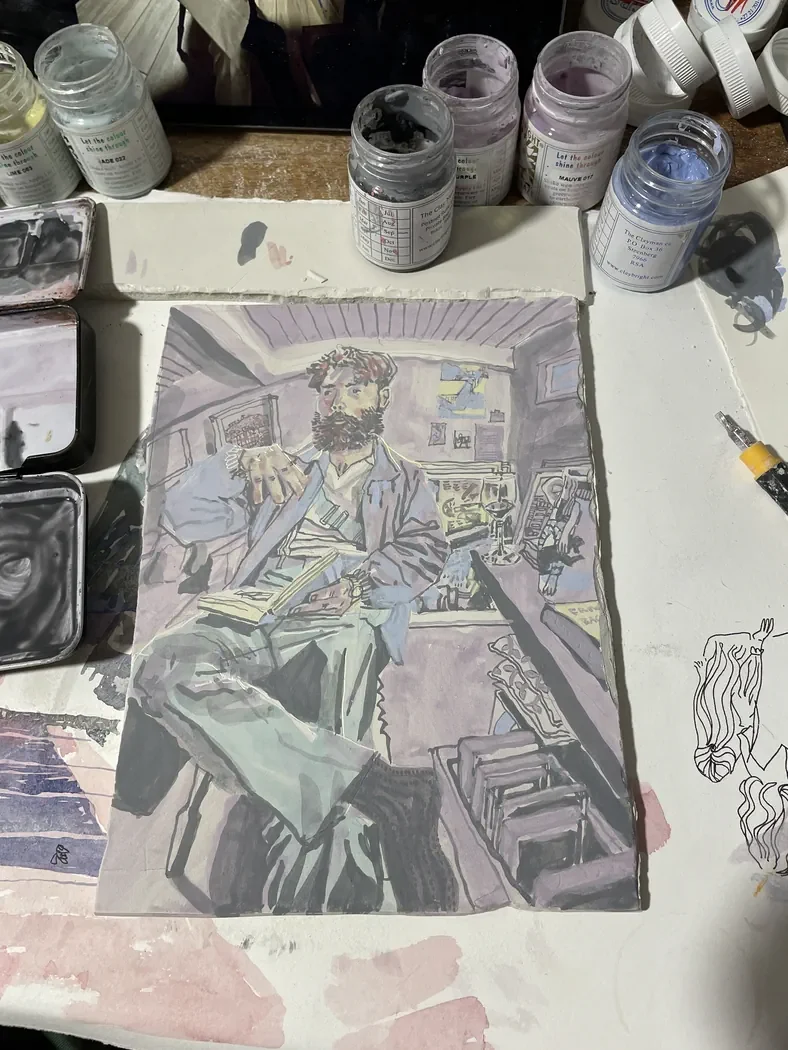
Michael collaborated with the accomplished ceramicist Karlien Van Rooyen from 2025 to mid 2026.
Together they created 12 sculptures. 8 sculptures were exhibited at Knysna Fine Art and 3 were included in Spier Arts Trust’s 2026 Annual Ceramics Show.
Artist Statement:
This collaboration between Karlien van Rooyen and Michael Beckurts unfolds as a dialogue between two bodies navigating the world through different lenses of ability. By merging Karlien’s translucent, body-shaped clay vessels with Michael’s narrative illustrations, the artists move beyond normative frameworks to articulate a shared somatic language. The works are shaped not by absence, but by points of intersection formed through intimacy, mutual support, and the act of carrying one another.
The surface of the clay becomes a site of exchange. Michael illustrates the vessels with cherished landscapes and moments of family life: gestures of primal belonging that open a conversation around nuanced barricades to access. Places one body cannot reach are translated and reimagined through the other, allowing environments to exist relationally rather than physically. The vessels stand in for bodies: breakable and held. They speak to unseen pain and to the particular tenderness with which certain bodies must be carried through the world. Passing through the kiln’s fire, vulnerability is revealed; colour deepens, and what survives is transformed: strengthened, yet still fragile.
Michael’s decision to portray the world as he exists within it marks a shift from silence to intentional presence. The act of painting oneself becomes both necessary and radical:
When the mirror does not exist, it must be built.
Karlien’s vessels hold the weight of an invisible battle: the quiet gravity of a nature lover often beset by a spectre of mysterious pain. While she carries Michael’s physical body into exhibitions and ocean swims, he carries the world back to her through his paintings offering mental access when illness interrupts perception. Together the works assert interdependence as a form of strength. They propose a way of being in which access is shared, absence is met with care, and presence is built – not alone, but in relationship.